Caffeine is the most commonly used psychoactive substance in the world. A cup of coffee in the morning can help perk you up and get you moving, but too much caffeine can lead to jitters, anxiety, and even insomnia. Some of the most common sources of caffeine include coffee beans, tea leaves, kola nuts (from which cola drinks get their flavour), cacao beans (from which we get chocolate), and guarana berries. Interestingly, even certain types of wine contain trace amounts of caffeine due to a chemical reaction between the grapes and yeasts used in the winemaking process.
But what we are really interested in is how to best utilise caffeine in a health and fitness regime, which sources of caffeine are most effective in pre-workouts, and how to know when enough is enough, plus what to look for beyond caffeine alone.

Caffeine Sources in Pre-Workout Supplements
Caffeine can improve alertness, reaction time, and focus when taken in appropriate doses, and it can also increase endurance and delay fatigue. For this reason, it is often added to pre-workouts.
Caffeine sources commonly used in pre-workouts include:
Caffeine Anhydrous
Produced by removing caffeine extract from coffee beans through solvent extraction, then drying the resulting powder to remove all water, yielding a substance containing roughly 96 to 98% caffeine by weight. It is usually preferred by those who use large doses of caffeine for its stimulatory effects, and is more stable than its liquid or ground counterparts, maintaining its potency for much longer, allowing users to get a more even energy boost over time.
Caffeine Citrate
A combination of caffeine and citric acid, often used to support mental alertness and physical performance. Caffeine citrate is absorbed more gradually than caffeine alone, providing a more sustained energy boost, and is thought to be better tolerated by individuals who have trouble absorbing non-protein bound forms of caffeine. Citrate may help support blood flow and oxygen uptake by cells, and can help buffer lactic acid, supporting exercise performance.
Green Tea
Packed full of nutrients and antioxidants that can help support energy levels, muscle recovery, and performance, in conjunction with a healthy diet and lifestyle. Key compounds include caffeine, EGCG, L-theanine, and catechins. Caffeine stimulates the central nervous system and promotes thermogenesis, while EGCG supports metabolic processes and L-theanine helps support focus and mental clarity.
Yerba Mate
A shrub native to South America, brewed into a herbal tea for centuries. Its leaves contain caffeine and several other compounds, including saponins, flavonoids, and amino acids, which work together to support energy levels, mental clarity, and physical performance. Yerba mate is also rich in antioxidants and vitamins, and is high in chlorogenic acid, a compound studied for its role in supporting metabolism.
How Much Is Too Much?
The use of high-stim pre-workout supplements to support athletic performance is becoming increasingly prevalent in the fitness community. Unfortunately, this rise in popularity has also been accompanied by an increase in cases of caffeine intolerance, which can present as increased anxiety and heart rate, dizziness, difficulty sleeping, and gastrointestinal discomfort.
The leading cause of caffeine intolerance is regular consumption of high levels of caffeine on a consistent basis. Many pre-workout formulas include large doses of caffeine to give users an extra boost in energy and focus before their workouts. Over time, high caffeine levels can lead to dependency and result in adverse reactions when that same dose is consumed daily. Additionally, those who are more sensitive or predisposed may experience these effects even with lower doses or less frequent use.
So how much is too much? There is no one-size-fits-all answer: the amount of caffeine that is appropriate for one person may be too much for another. Several factors need to be considered, including body weight, tolerance, and the type of exercise being performed.
Generally speaking, an entry-level pre-workout supplement will contain around 100 to 200 mg of caffeine per serving. More advanced pre-workouts will have between 300 and 500 mg per serving. 100 to 200 mg is generally considered a reasonable starting point for most people, but it is always best to start with a lower dose and gradually increase as needed. This helps you gauge your own tolerance and avoid overconsumption.
Alternatives to Caffeine in Performance-Enhancing Supplements
For avid users of high-stim pre-workouts, the mere suggestion of reducing caffeine intake to offset caffeine intolerance might strike as poor advice. Many traditional pre-workout supplements rely solely on increasing caffeine to give the desired effects. However, as the global pre-workout market has grown, leading supplement brands are increasingly replacing brute force with smarter formulation, incorporating intelligent, clinically-researched alternative and complementary compounds. The sports supplementation market is now more informed and more engaged than ever in the science behind the products it consumes.
While caffeine can be an effective tool to support energy levels and performance, it is not the only option. The most intelligent and cutting-edge pre-workouts include the following in their formulations:
Nootropics
Nootropics, also called "smart drugs," are a class of substances widely used to support cognitive function, mental performance, and a sustained energy boost, without the jitters and crashes associated with caffeine. Common nootropics include L-theanine, lion's mane mushroom, and rhodiola rosea, studied for their role in neural communication, blood flow to the brain, cerebral energy metabolism, and neurotransmitter levels, in conjunction with a healthy diet and lifestyle.
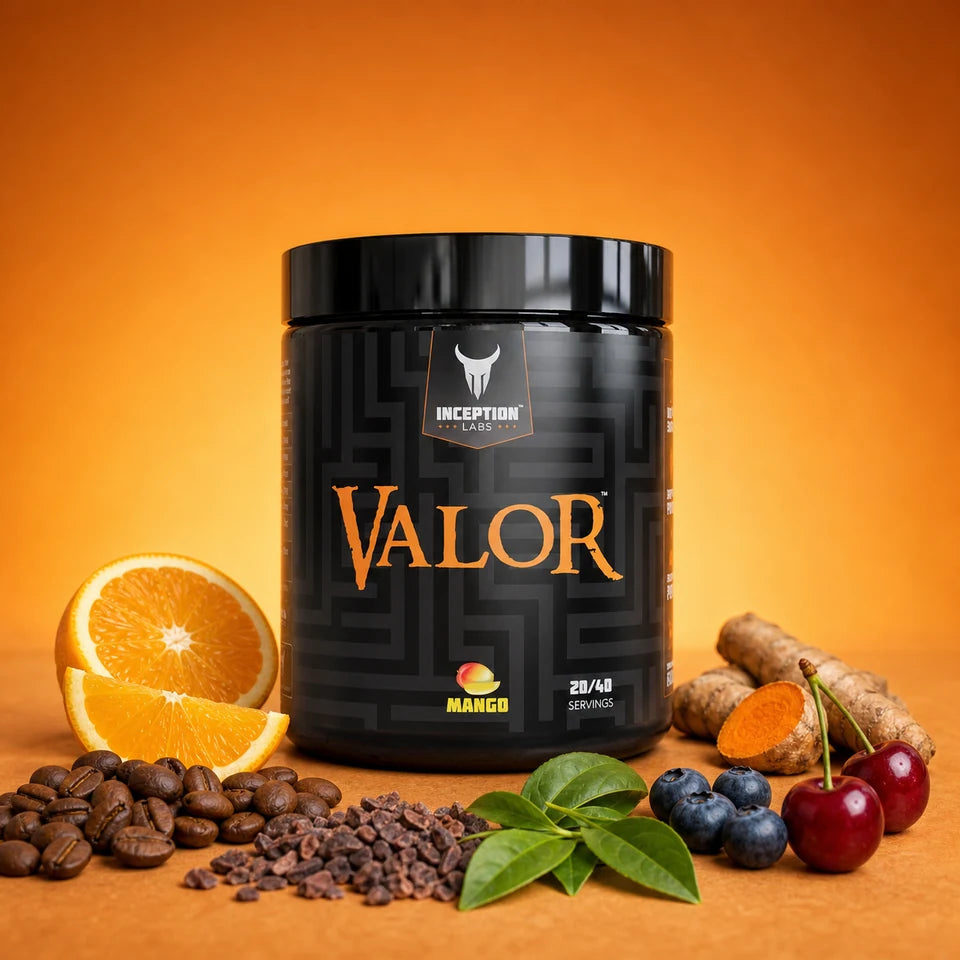
Found in: Inception Labs Valor Pre-Workout
Adaptogens
Plant-based substances studied for their role in supporting the body's response to stress. Adaptogens have become increasingly popular in pre-workout supplements for their potential to support energy and endurance without the stimulant side effects, like jitteriness or restlessness, that can come with caffeine, and are studied for supporting the body's hormone balance and overall wellbeing, in conjunction with a healthy diet and lifestyle.
Found in: Inception Labs Valor Pre-Workout
Final Thoughts
Pre-workouts are designed to help you have an edge in the gym. But what if you could supercharge your pre-workout with even more considered ingredients? You may be surprised at the difference nootropics and adaptogens make alongside caffeine, supporting focus and energy for a better session. When combined thoughtfully with caffeine, they can work together without adding to the undesirable side effects associated with high-stim, brute-force caffeine dosing.
Give one of our recommended pre-workouts a try when you next stock up at Supplement Solutions, in conjunction with a healthy diet and lifestyle.
Inception Labs Valor Pre-Workout
A pre-workout formula combining caffeine with nootropic and adaptogenic ingredients studied for their role in supporting energy, focus, and performance, in conjunction with a healthy diet and lifestyle.
See Product
Dr Matt Walley, PhD
CEO and Managing Director of the wider Inception Group (Supplement Solutions, Inception Labs, Inception Gym, Inception Nutrition), Matt holds a PhD in Structural Equation Modelling and Cognitive Psychology. With over 20 years of industry experience, Matt's expertise extends across supplementation, nutrition, and training, with a particular interest in neuropharmacology. Outside of the health and fitness space, Matt is Managing Director of a linguistics and consumer psychographics AI suite, and owner of a local martial arts school in Christchurch, New Zealand.