Quick answer
For many shorter New Zealand walks in mild conditions, plain water and normal food are enough. The Mountain Safety Council suggests roughly two litres of water a day as a tramping starting point, with more needed in heat or on a harder trip. As duration, heat and sweat losses rise, an electrolyte drink or tablet can become useful alongside water, not instead of it.
- 01
Around two litres a day is a common New Zealand tramping baseline; hot or hard days need more.
- 02
Short, mild-condition walks are often fine with water and normal meals.
- 03
Long, hot or high-sweat tramps and summer running events raise the case for added sodium.
- 04
Drinking too much plain fluid without any sodium can be a problem on very long days too.
How much fluid do you actually need on a New Zealand tramp?
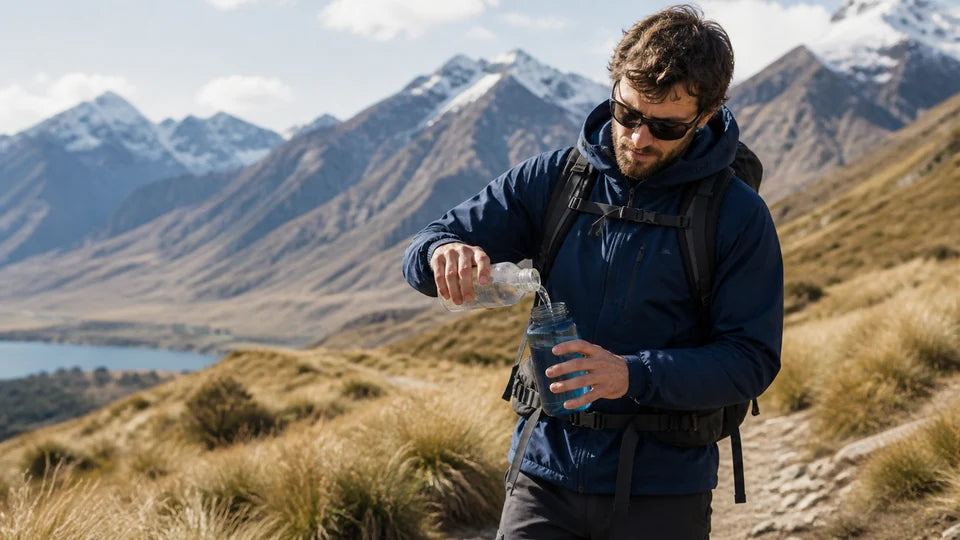
The New Zealand Mountain Safety Council suggests most trampers need about two litres of water a day to stay adequately hydrated, and more again when it is hot or the trip is demanding. Treat that figure as a starting point rather than a fixed target, since pack weight, terrain, fitness and individual sweat rate all change real fluid needs.
Summer conditions across much of New Zealand, along with exposed ridgelines and open farmland tracks, can push sweat losses well above what a short local walk would require. Checking hut notes, forecasts and known water sources before you go helps you plan how much to carry rather than guessing on the day.
Why does sweat sodium matter more as a walk gets longer or hotter?
Sodium is the main electrolyte lost in sweat. On a short, cool walk this loss is usually small relative to what a normal diet replaces afterwards. On longer summer tramps, multi-day trips or repeated hot days, cumulative sodium loss becomes more significant and can outpace what plain water rehydration addresses on its own.
This is also why relying only on thirst can be an imperfect guide during prolonged heat exposure. Drinking plenty of plain water while sodium remains low is not the same as being well hydrated, and it can occasionally contribute to low blood sodium on very long, hot exertion days.
When is plain water usually enough, and when do electrolytes help more?
Plain water is a reasonable default for shorter day walks in mild conditions, gym sessions under about an hour, and situations where you can eat normally before and after. A pinch of salt in food or a normal meal often covers everyday sodium needs in these cases.
Electrolytes become more directly useful for full-day or multi-day tramps, hot-weather hiking or running, heavy documented sweating, or when you need to rehydrate quickly after a demanding day before an early start the next morning.
What should you check on a tramping or hot-weather electrolyte product?
Compare sodium content per serve, the recommended mixing volume, and whether the product also contains carbohydrate, caffeine or other amino acids. Some electrolyte and amino-acid drinks are designed to be sipped throughout a long day rather than taken as a single hit.
- Sodium per serve and total daily sodium from all sources
- Whether the product needs to be mixed with a specific water volume
- Any added caffeine, sugar or amino acids that change how it fits your day
- How the product tastes and sits with you at the concentration recommended
People also ask
Frequently asked questions
Do you need electrolytes for a short, easy New Zealand day walk?
Often not. In mild conditions and over a shorter distance, water plus normal meals is usually enough. Heat, exposure, pack weight and personal sweat rate can change that on any given day.
Can electrolyte tablets be added to water sourced from a stream or hut tank?
Electrolyte tablets do not treat water for safety. Follow standard backcountry advice and treat natural water sources, such as boiling, before adding electrolytes for taste or sodium content.
What are signs you may not be keeping up with fluid and sodium losses on a hot tramp?
Persistent thirst, headache, dark urine, unusual fatigue or cramping can be signs to stop in the shade, rest and reassess fluid and food intake. Severe symptoms, confusion or ongoing deterioration need urgent help rather than a supplement fix.
Evidence and further reading
This guide provides general education, not diagnosis or individual medical advice. Follow product labels and speak with an appropriately qualified health professional when you are pregnant, nursing, taking medication or managing a health condition.
Keep learning