Quick answer
Vitamin B12 supports red blood cells, nerves and brain function, and occurs naturally almost only in animal foods. Health New Zealand and Healthify flag vegans as an at-risk group, advising confirmed B12-fortified foods plus a supplement if intake is not consistent. This is especially emphasised for vegans who are pregnant or breastfeeding.
- 01
Vitamin B12 is found naturally only in animal foods, which is why vegans are specifically named as an at-risk group in New Zealand health guidance.
- 02
Fortified foods must be checked on the label — plant milks, some breakfast cereals, and yeast extracts like Marmite can contain added B12, but not all products or brands do.
- 03
Foods sometimes claimed to contain B12 for vegans — such as spirulina, seaweed and tempeh — generally contain inactive B12 analogues that the body cannot use, so should not be relied on as a dependable source.
- 04
A B12 supplement is commonly advised for vegans, particularly if fortified food intake is not regular, and especially during pregnancy or breastfeeding.
Why are vegans specifically at risk of low B12?
Vitamin B12 is essential for red blood cell production, healthy nerve tissue and brain function. Unlike many nutrients that appear across a wide range of plant and animal foods, B12 occurs naturally almost exclusively in animal products such as meat, poultry, fish, eggs and dairy.
Health New Zealand and Healthify both specifically list people following a strict vegan diet as a group at risk of B12 deficiency, alongside breastfed infants of vegan mothers and some older adults with a poor appetite.
Which fortified foods actually count?
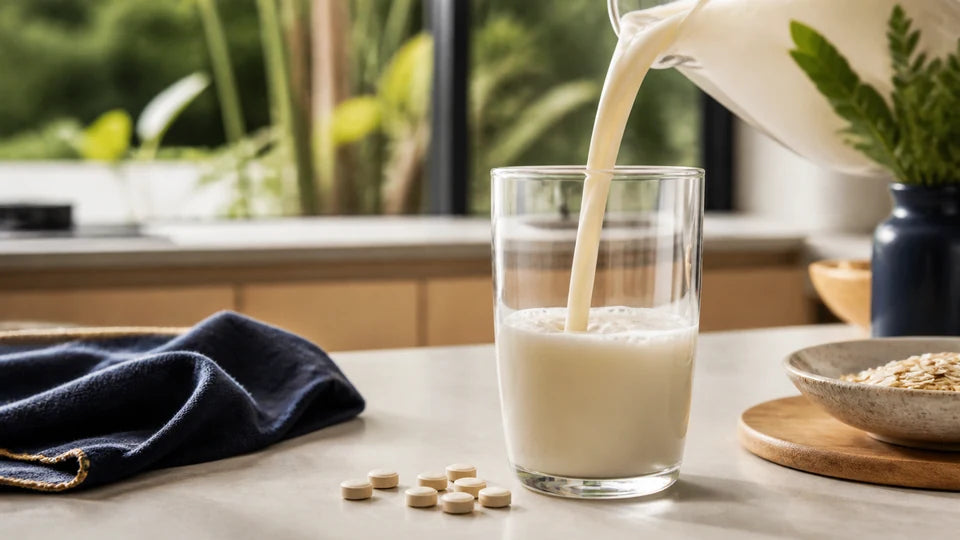
Healthify and Health New Zealand both point to specific fortified food categories worth checking for added B12: fortified plant milks (soy, almond, oat, rice and similar), some breakfast cereals, yeast extracts such as Marmite, and nutritional yeast. Not every plant milk or cereal brand is fortified, and formulations can change, so the current nutrition information panel and ingredient list are what matter — not the food category alone.
Health New Zealand notes, for example, that one cup (250ml) of a fortified plant milk can provide close to half of a typical day’s B12 needs, which illustrates why a consistent, confirmed fortified source in your actual weekly diet is more useful than an occasional taste of something that happens to be fortified.
What about spirulina, seaweed or fermented foods like tempeh?
Health New Zealand and Healthify guidance both caution that foods such as seaweed, spirulina, kimchi, miso and tempeh may contain vitamin B12-like compounds, but often in a form the body cannot actually use, or in amounts too small to be reliable. These should not be treated as a dependable vitamin B12 source in place of confirmed fortified foods or a supplement.
When is a supplement commonly advised?
If a vegan diet does not reliably include fortified foods with confirmed added B12, Health New Zealand and Healthify guidance both point toward a vitamin B12 supplement, ideally chosen with input from a GP, pharmacist or dietitian. B12 supplements are not made from animal products, so they are considered suitable within a vegan diet.
This is particularly emphasised for vegans who are pregnant or breastfeeding, since low maternal B12 can also affect an exclusively breastfed infant. If you have any signs that concern you, such as unusual fatigue, tingling or numbness, arrange a blood test with your healthcare provider rather than self-diagnosing.
People also ask
Frequently asked questions
Can spirulina or seaweed provide reliable vitamin B12 for vegans?
Generally, no. New Zealand health guidance notes these foods may contain B12-like compounds that the body cannot use effectively, so they should not be relied on as a dependable source in place of fortified foods or a supplement.
How do I know if a plant milk or cereal is actually fortified with B12?
Check the nutrition information panel and ingredient list for "vitamin B12" or "cobalamin" listed as an added ingredient. Fortification varies by brand and can change over time, so check the specific product you buy rather than assuming the whole category is fortified.
Should breastfeeding vegan mothers take a B12 supplement?
This is specifically flagged in New Zealand guidance as a situation where B12 supplementation is often advised, since a breastfed infant depends on the mother’s B12 status. Discuss the right approach with a GP, midwife or dietitian.
Evidence and further reading
This guide provides general education, not diagnosis or individual medical advice. Follow product labels and speak with an appropriately qualified health professional when you are pregnant, nursing, taking medication or managing a health condition.
Keep learning